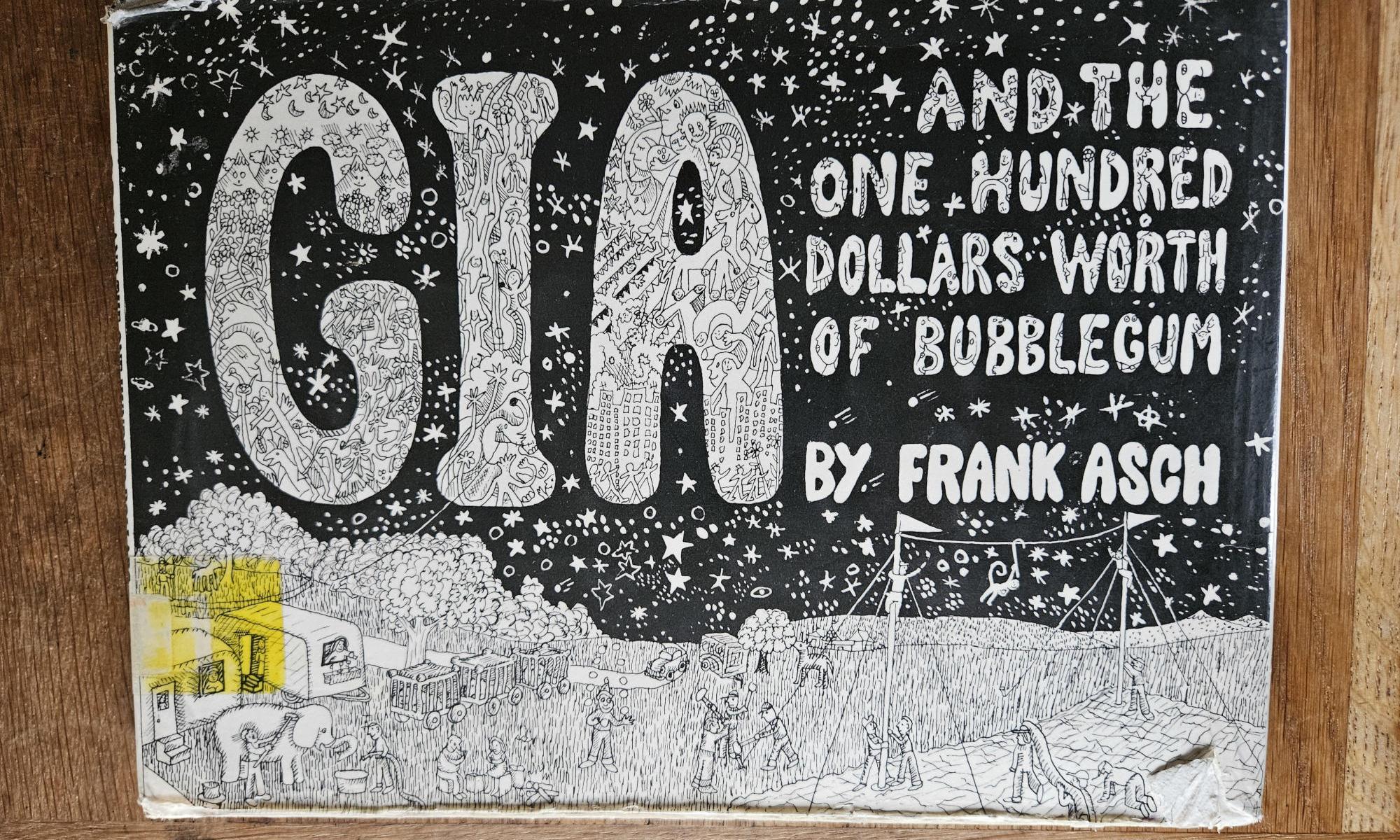
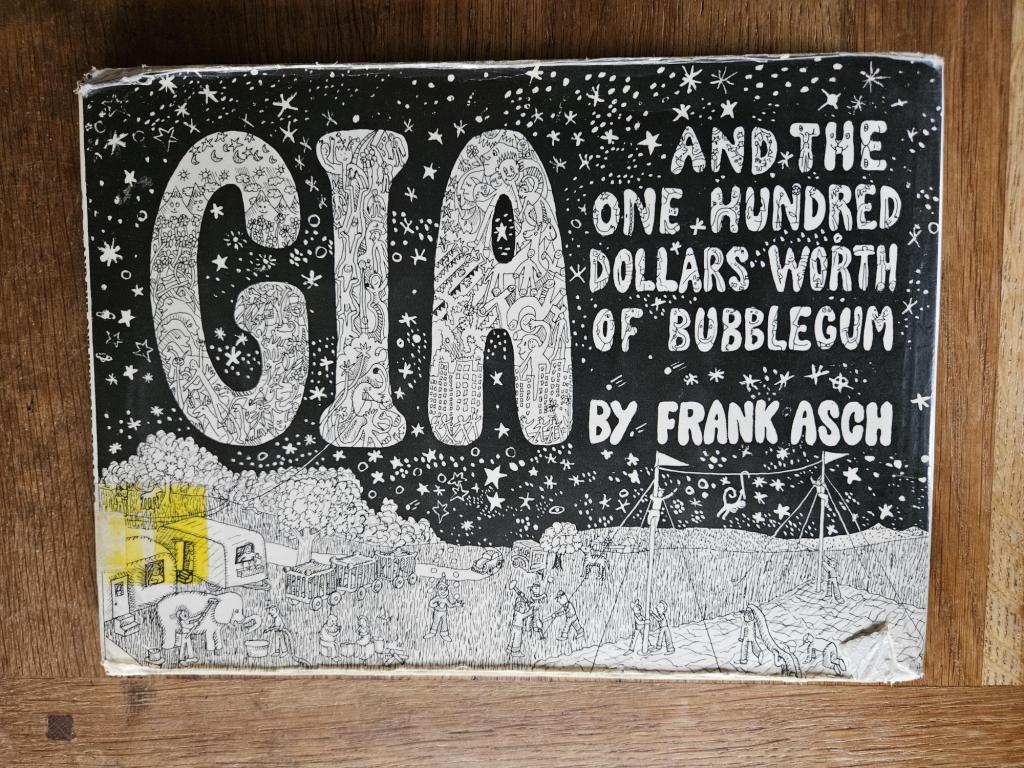
A delightfully surreal picture book by Frank Asch – Gia and the One Hundred Dollars Worth of Bubblegum blends kindness, quirky humour, and richly detailed black-and-white illustrations into a sensory experience perfect for children who love patterns, hidden details, and imaginative storytelling.
Some picture books feel as though they come straight from the imaginative tangle of a family car journey – the kind of collaborative storytelling where everyone takes turns adding the next, ever-more-outrageous line. Gia and the One Hundred Dollars Worth of Bubblegum is exactly that sort of book. It’s wildly inventive, visually intricate, and full of that gleeful, slightly anarchic energy that springs from shared imagination.
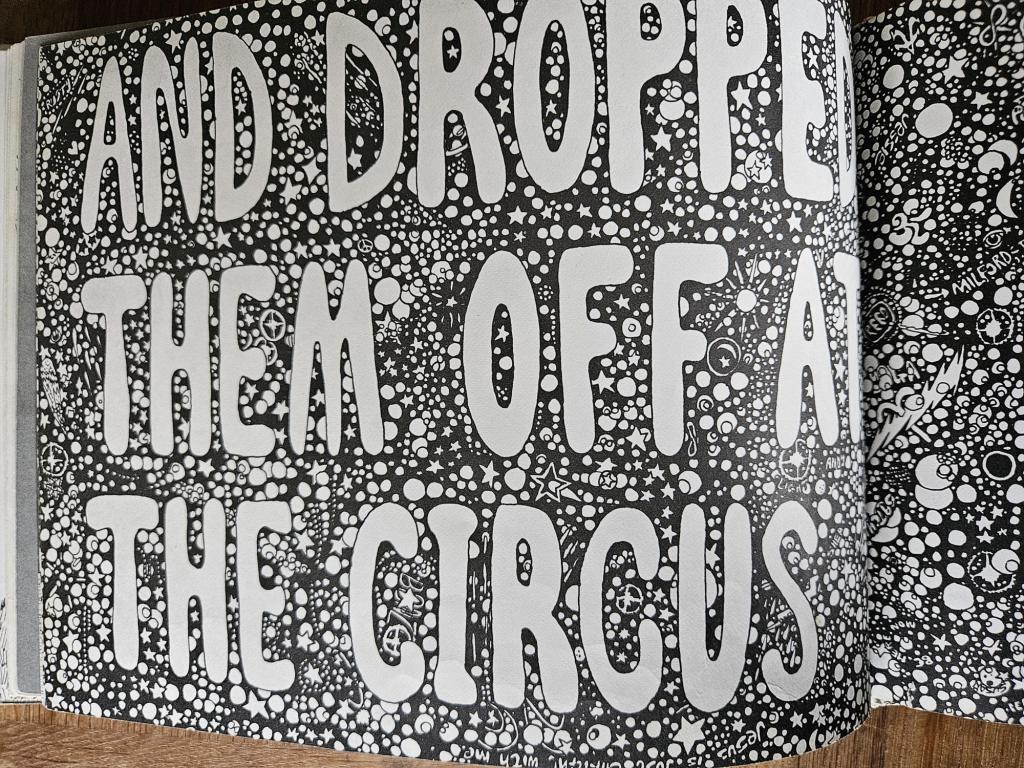
Despite being printed entirely in black and white, it bursts with life. Tiny drawings fill the lettering, shifting backgrounds create a playful rhythm, and page orientation changes add moments of visual drama. It’s a sensory-rich world that feels almost kaleidoscopic – a book that rewards children (and adults) who love spotting patterns, details, and hidden delights.
A story that grows from kindness
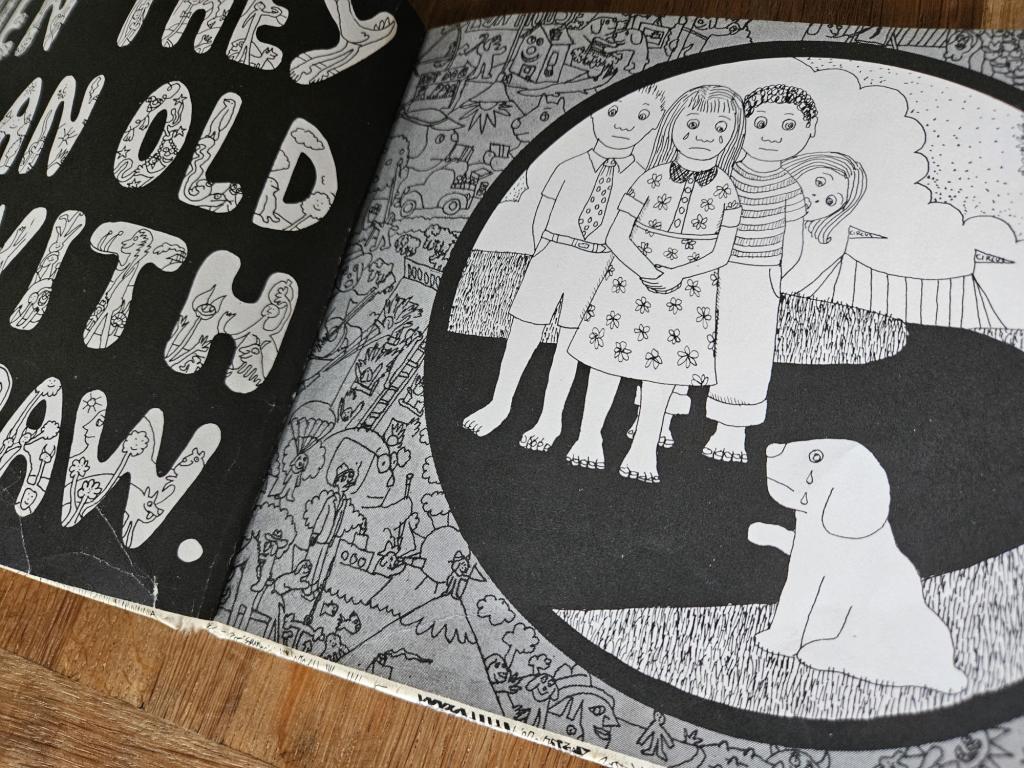
Before any bubblegum appears, the story begins with something gentle and tender – Gia’s love of animals. On their way to the circus, Gia and her friends meet an injured dog. She takes him home and carefully bandages his paw. In one of the most delightfully surreal moments of the book, the dog says “thank you” and hands her a hundred dollars.
It’s such a quirky detail, yet it gives the story its heart. Kindness comes first, imagination follows, and everything that happens next spirals outward from this small, compassionate act.
A kaleidoscope in black and white
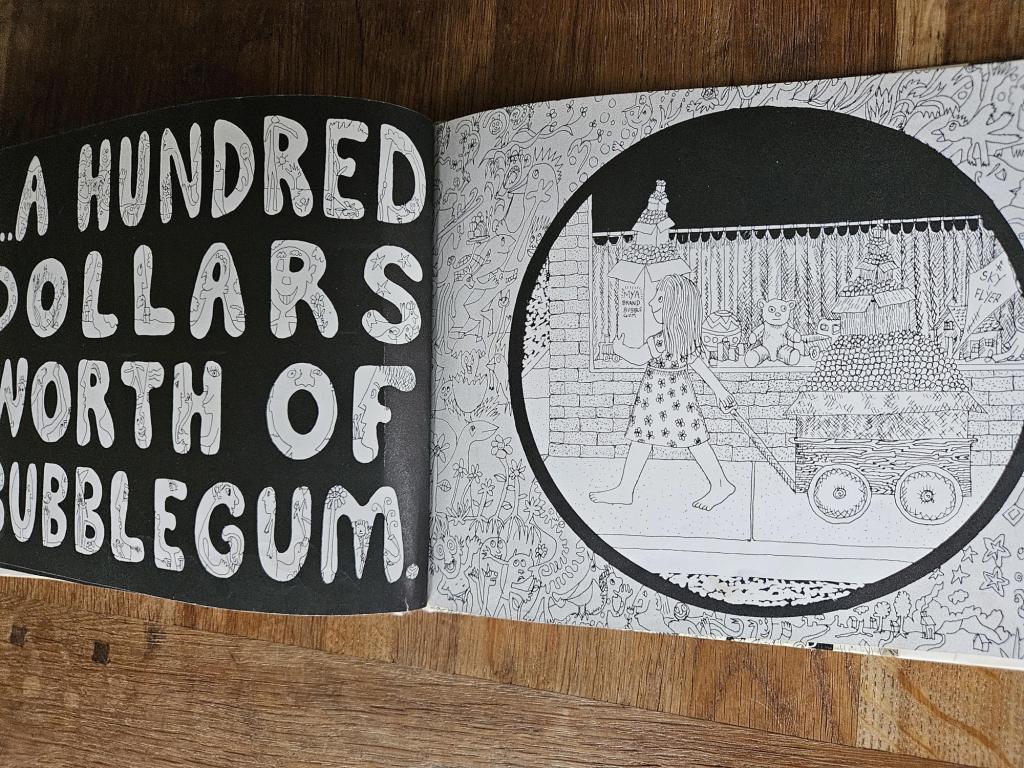
Frank Asch’s illustrations are mesmerising. He fills every inch of space with miniature worlds – clowns, animals, stars, trees, and tiny figures that spill across the page like a visual treasure hunt. The lettering itself becomes an artwork, each letter packed with tiny characters that children adore searching through.
For many neurodivergent children, this kind of detailed visual environment feels deeply pleasurable – rhythmic, patterned, immersive. Even in monochrome, the world of the book feels vibrant and alive.
When bubblegum becomes an adventure
The story’s turning point comes when Gia buys one hundred dollars’ worth of bubblegum, chews it all, and blows a bubble that grows to impossible proportions. Soon it sweeps her and her friends skyward, lifting them above streets and treetops.
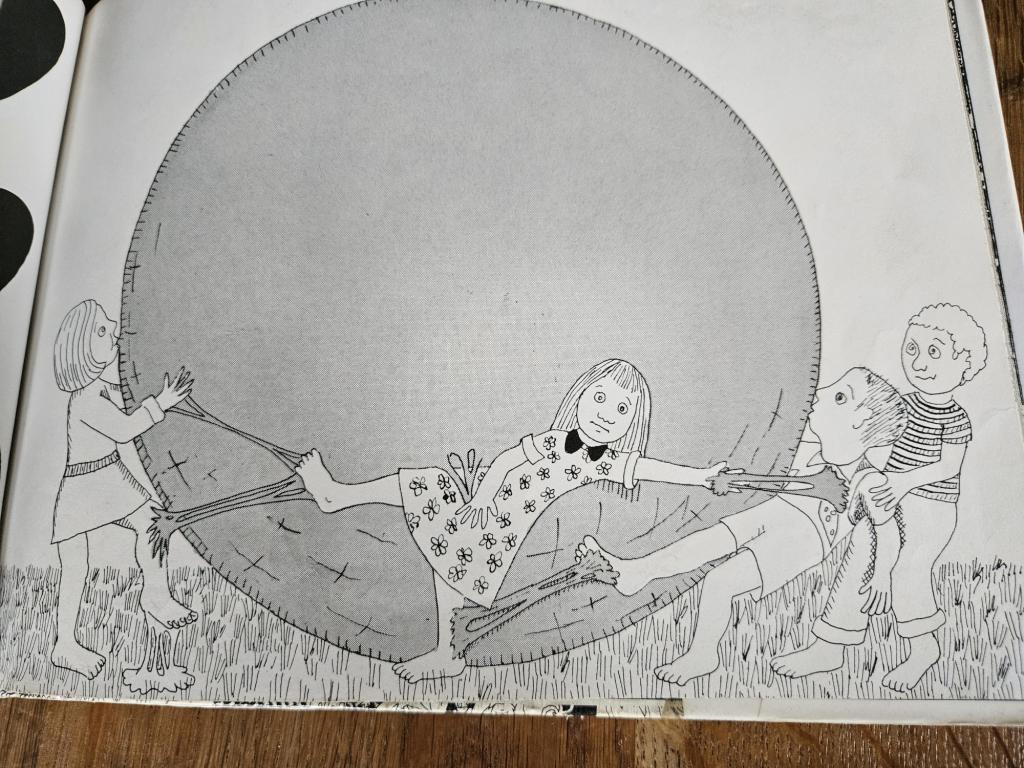
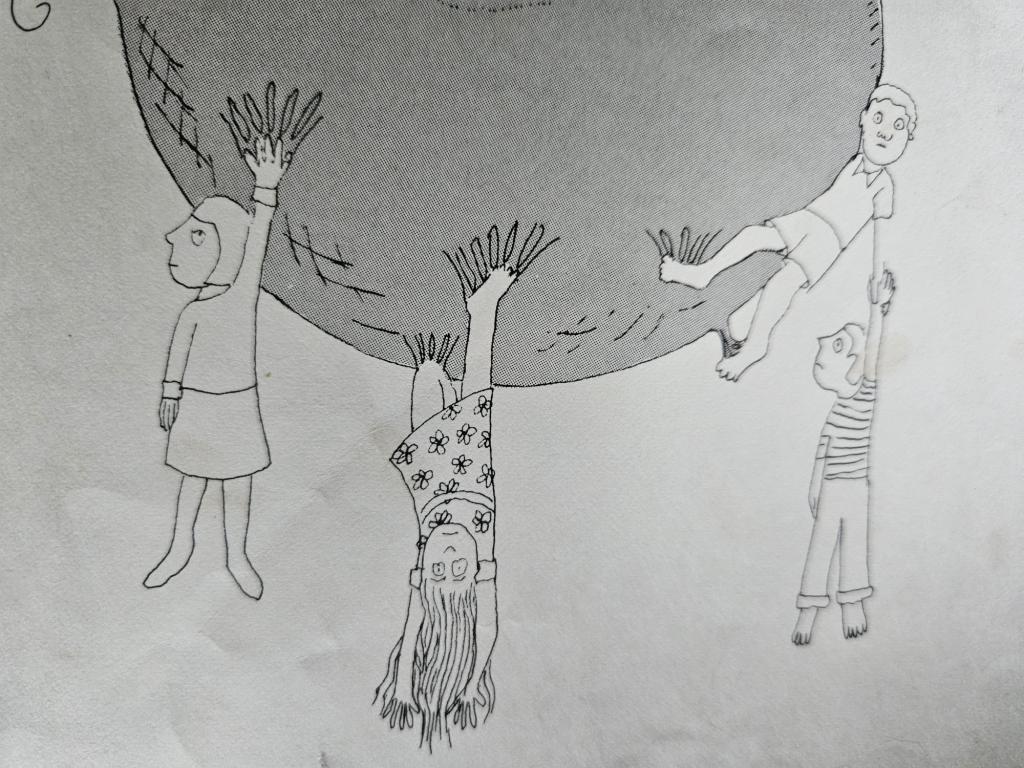
Everything about these pages feels alive – the stretching gum, the tumbling bodies, the chaotic movement. Asch uses scale so cleverly: suddenly the children look tiny, swallowed up by the swelling grey orb.
A quiet heroic moment
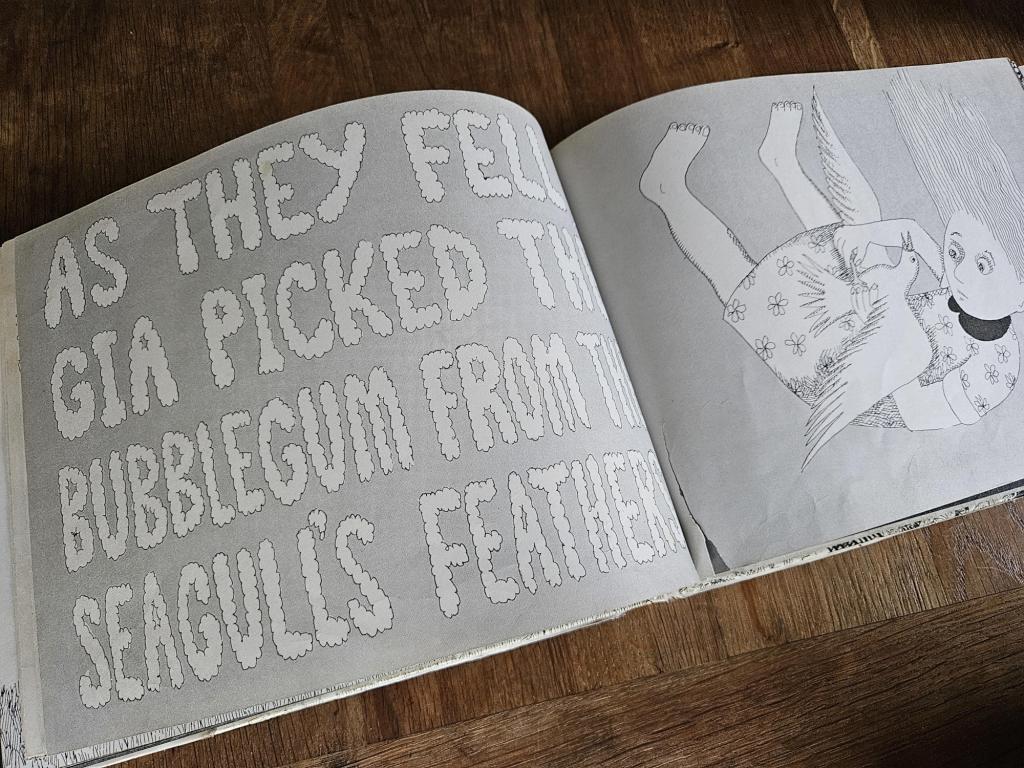
Suddenly, a “near-sighted seagull” flies straight into the bubble, and the bubble pops. As the children tumble towards the ground, Gia picks the bubblegum from the seagull’s feathers. Amid all the frenetic motion, this calm moment stands out. It echoes the tenderness she showed the injured dog – a sense that, even in the wildest adventure, kindness is her instinctive response.
A round-the-world thank-you
Freed from the gum, the seagull thanks Gia in the book’s wonderfully surreal logic by swooping beneath the falling children and carrying them on a spectacular flight around the world. Mountains, oceans, far-off places – they glimpse it all before the bird deposits them safely at the circus. It’s a joyous, looping conclusion: the children finally arrive where they were headed all along, thanks once again to an act of kindness that sets the story back on its feet.
A final glimpse behind the pages
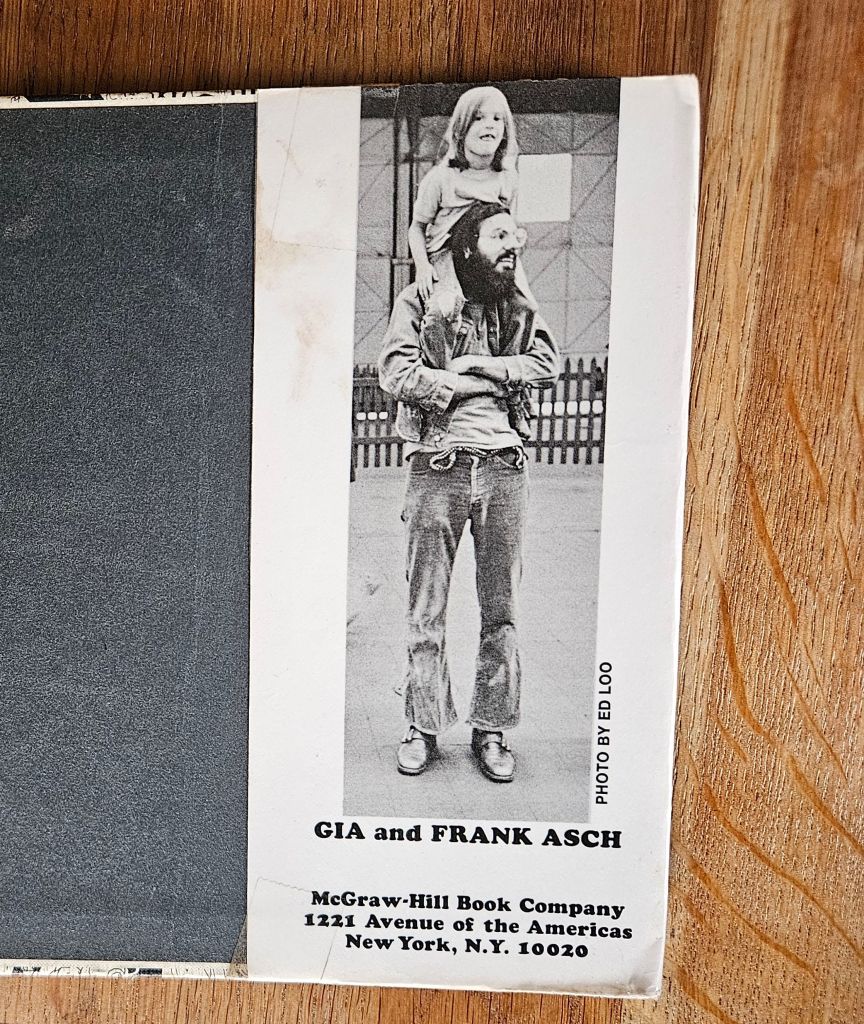
The photo at the back of the book shows little Gia perched on her father’s shoulders. It’s a lovely reminder that this book grew out of real family storytelling – that spontaneous, communal creativity that children spark so effortlessly.
What we love about this book
What my children and I all love about Gia and the One Hundred Dollars Worth of Bubblegum is its combination of tenderness and wild imagination. It begins with kindness, builds into delightful absurdity, and surrounds everything with detailed, mesmerising artwork. It’s the sort of book children return to again and again, finding new details each time and losing themselves in the sensory richness of its pages.
It’s quirky, compassionate, and visually extraordinary – a reminder of how imaginative play, shared storytelling, and a child’s perspective can produce something utterly unique.
Book details
Gia and the One Hundred Dollars Worth of Bubblegum
By Frank Asch
Originally published 1974 by McGraw-Hill Book Company
Images © Frank Asch / McGraw-Hill Book Company. Used under fair dealing for the purposes of criticism and review.
‘Kate Coldrick’s Book Corner’ is a blog by Kate Coldrick, a literacy tutor and educational writer based in Woodbury, Devon. Each post revisits a much-loved children’s picture book – exploring its illustrations, themes, and the memories it still holds. Find out more about the project on the About Book Corner page.
 Kate Coldrick's Book Corner