Esphyr Slobodkina’s classic picture book, “Caps for Sale” — reflecting on why its rhythm, repetition and emotion resonate so deeply with children, including those who see the world differently.
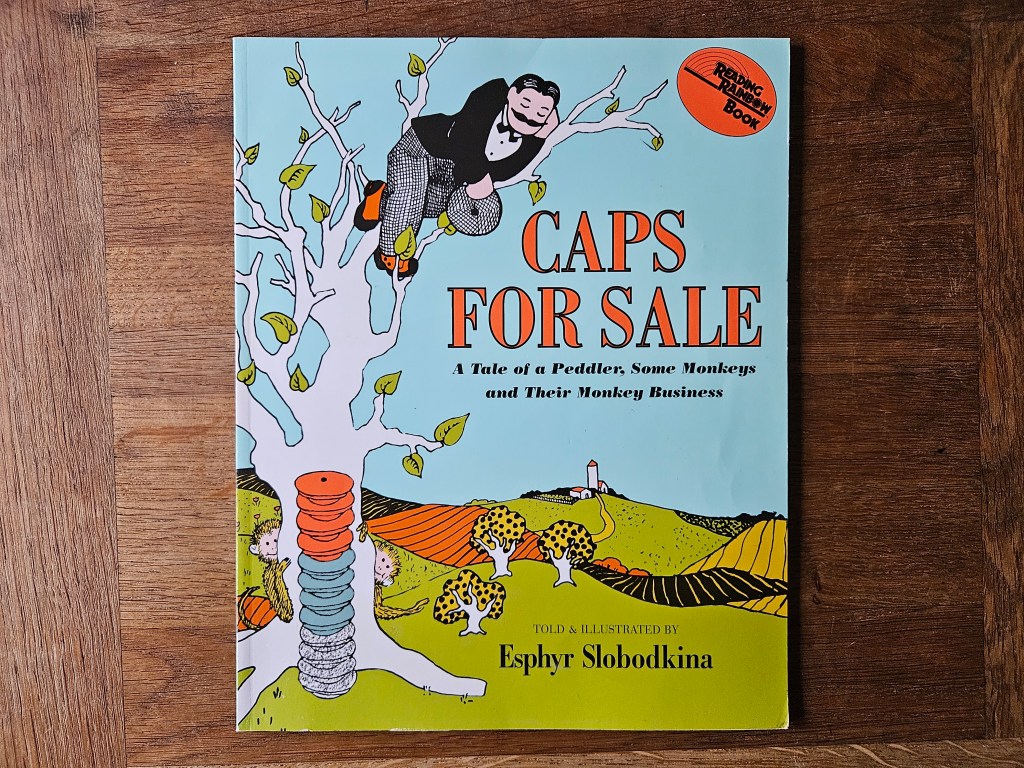
Caps for Sale by Esphyr Slobodkina (HarperCollins, 1940).
Esphyr Slobodkina’s Caps for Sale has one of those opening lines that stays with you:
“Once there was a peddler who sold caps.”
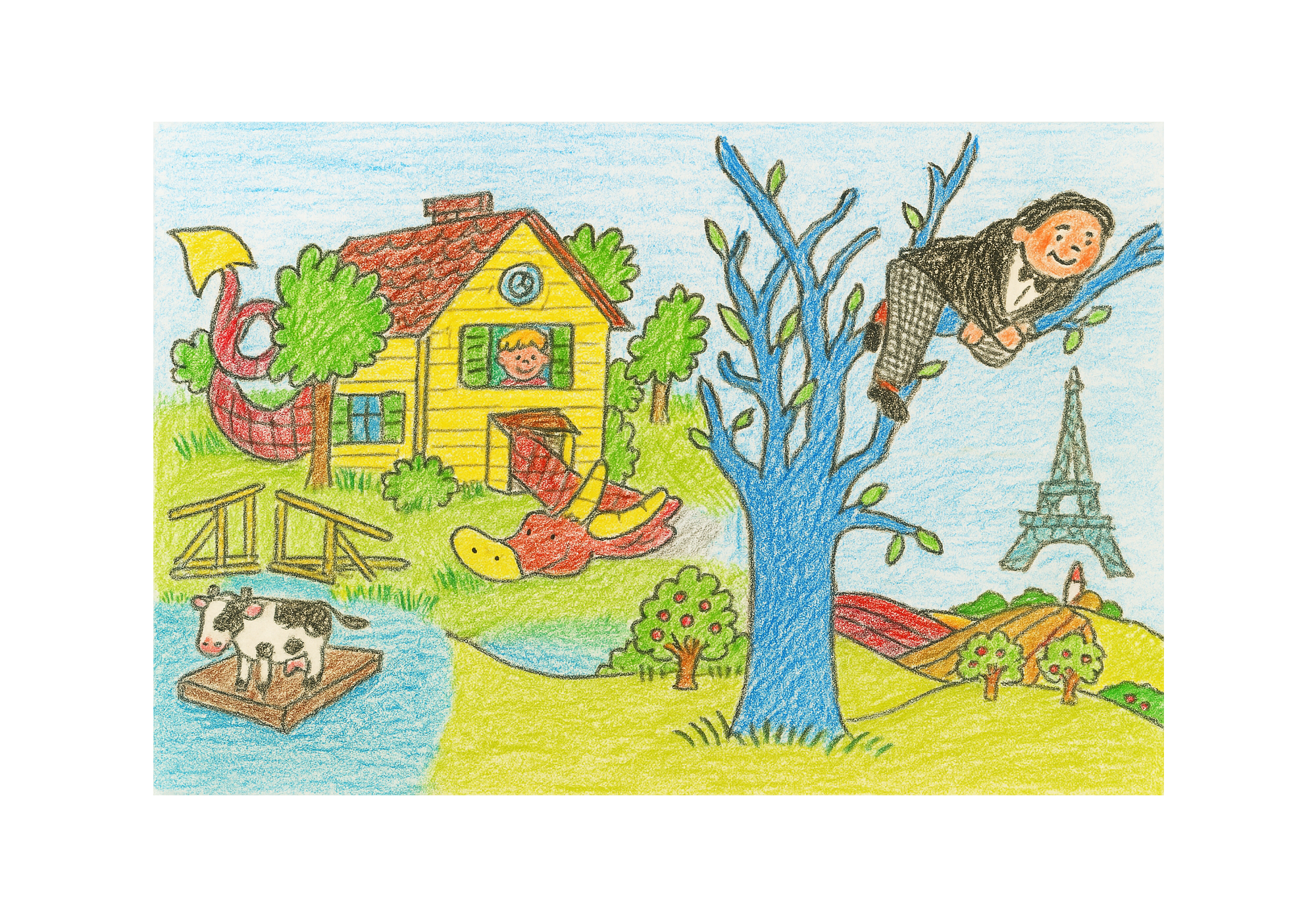
The peddler balancing his hats.
Simple, rhythmic, and instantly memorable. The story of a travelling hat seller and a troop of mischievous monkeys has delighted generations of children — and, in our house, it was my youngest’s absolute favourite.
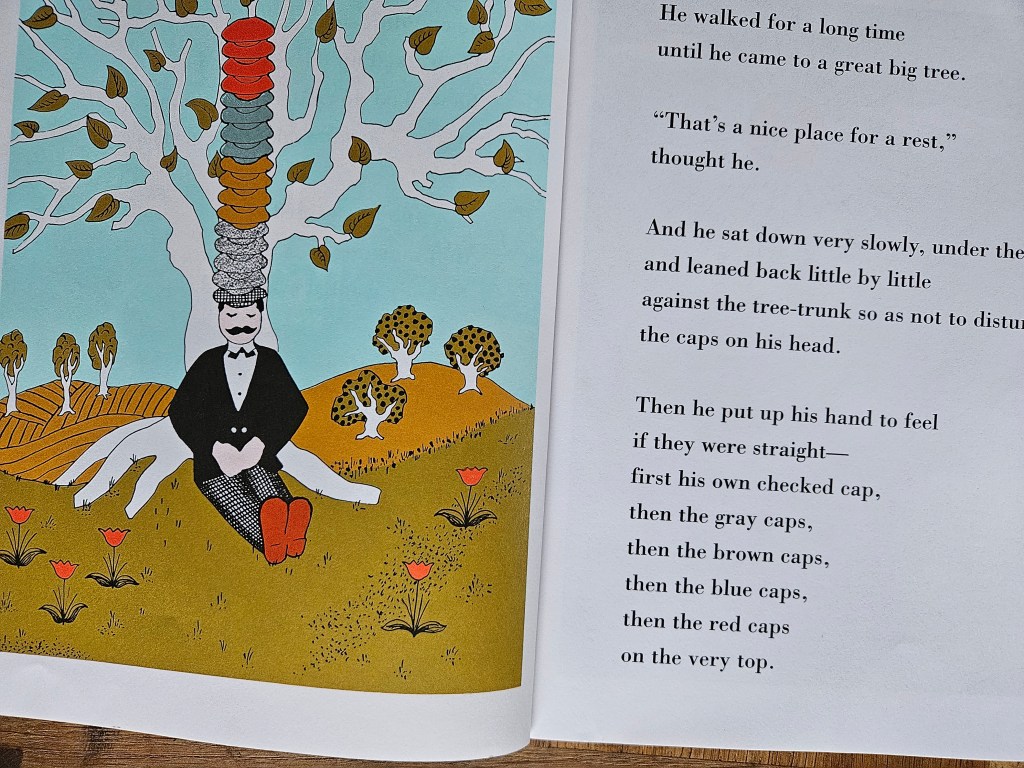
When he was little, he was captivated by the comical idea of stacking all those caps on your head — one checked, then grey, brown, blue, and finally red. There was something both absurd and deeply satisfying about the peddler’s balancing act.
We didn’t know it at the time, but he is autistic, and looking back now, I can see why Caps for Sale appealed so strongly to his way of seeing the world.
There’s order and pattern here — repetition, rhythm, clear cause and effect — yet also a rich sense of play. The peddler’s careful self-control, his methodical way of walking “so as not to upset his caps,” feels deeply relatable for a child who thrives on predictability.
Calling out “Caps! Caps for sale!”
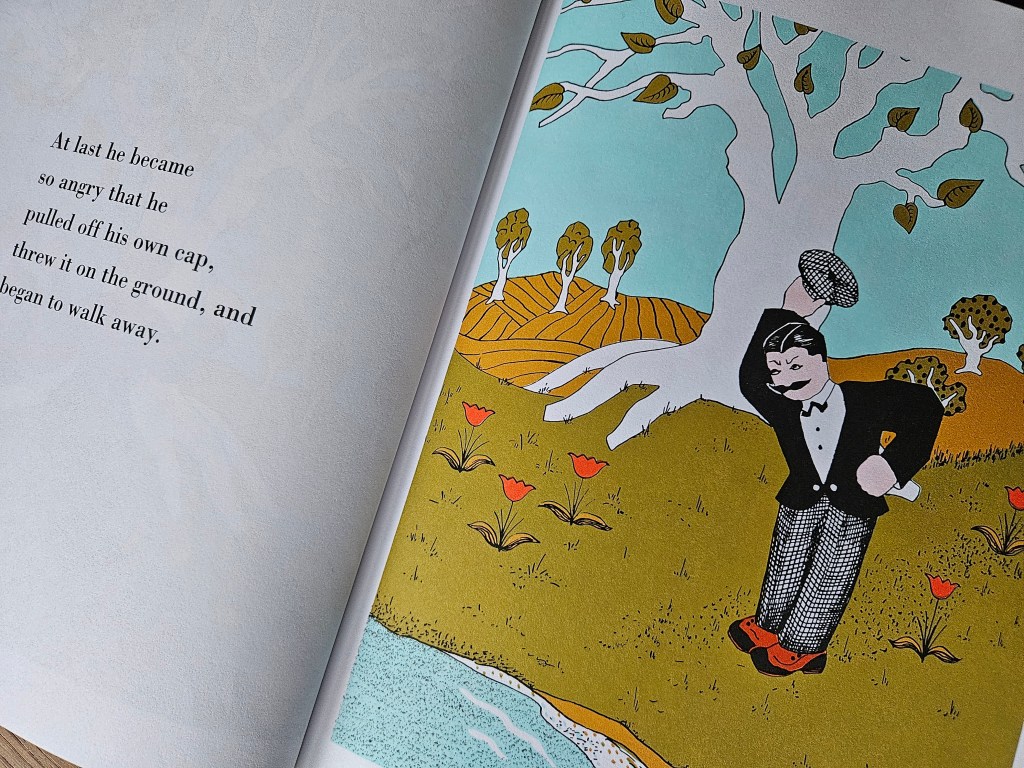
And then, when the monkeys mimic his every move and he loses his temper — throwing his own hat to the ground — it becomes a beautifully human moment of overwhelm. His frustration, his loss of control, his exhaustion after trying everything — these are emotions that any child, neurodivergent or not, can recognise.
The peddler resting under a tree.The monkeys mimic the peddler.The peddler’s frustration.
But what matters most is how the story ends. The monkeys follow his lead, the caps come tumbling down, and the peddler quietly picks himself up, stacks the hats again, and walks back to town. Order restored. Balance found.
The monkeys drop the caps.Balance restored.
It’s a perfect little parable of resilience — of how even after our most chaotic, emotional moments, we can put our hats back on and keep going.
Book details
Caps for Sale by Esphyr Slobodkina Originally published 1940, reprinted by HarperCollins Publishers
‘Kate Coldrick’s Book Corner’ is a blog by Kate Coldrick, a literacy tutor and educational writer based in Woodbury, Devon. Each post revisits a much-loved children’s picture book – exploring its illustrations, themes, and the memories it still holds. Find out more about the project on the About Book Corner page.






 Kate Coldrick's Book Corner